Inspired by More Words from My Heart of Cleophus P. Franklin Jr.
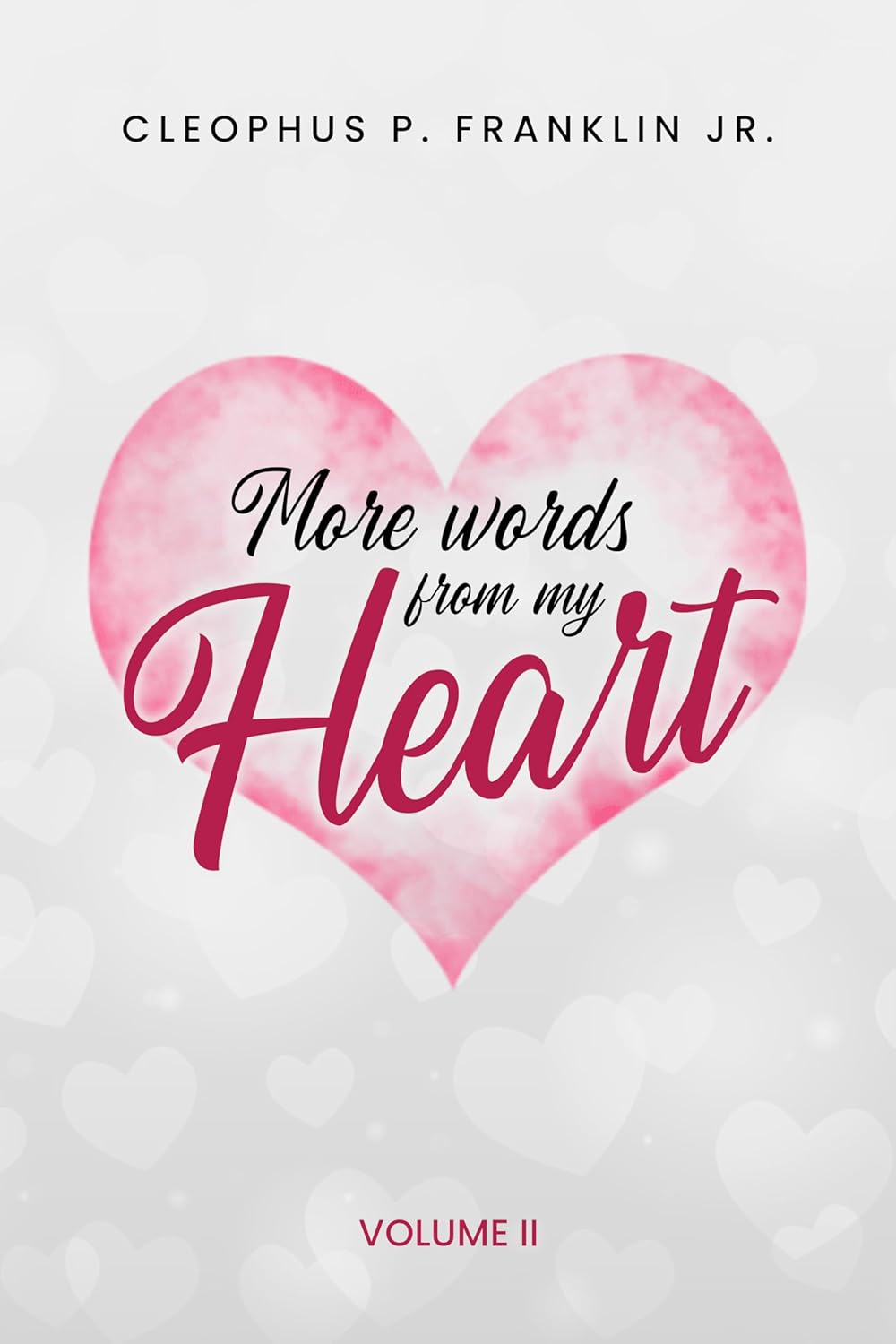
Language has always had a magic to it. One word can pick up a spirit, heal a heart, or usher one into a whole new way of looking at things. In More Words from My Heart, Cleophus P. Franklin Jr. reminds us that words are living energies, not static symbols, reservoirs of memory, emotion, and truth. His poetry illustrates how language, when honestly selected, creates raw feeling into something radiant, almost alchemical.
At its core, alchemy is transmutation, changing base metal into gold. When we use that metaphor for language, we start to understand how plain words, when informed by heart and truth, become treasures. Franklin’s book is a perfect example of that kind of transformation. Everyday life, joy, loss, and longing are distilled in verse that makes them into something more profound. Pain is turned into wisdom, love is song, and openness is strength.
Think of how Franklin describes the “little things” of life, those ephemeral moments we might easily forget. A smile, a touch, a small act of kindness, each is elevated and radiated with poetry. What would otherwise slip away into memory is saved, honed, and held aloft like a jewel. This is the gold of language: its ability to take the mundane and bring out its extraordinary shine.
But poetry does more than amplify beauty. It also lends voice to breakage, heartache, and goodbye. In poems where Franklin writes about loss, his language serves as both a reflection and a salve. They enable readers to recognize themselves in the image of sorrow but also provide the solace that they are not isolated. This is perhaps the greatest form of linguistic alchemy, when the sorrow itself is never eliminated but remodeled into something tolerable, even significant.
Language also spans time and distance. Franklin reminds us that we “live forever in our teachings and the lessons we learn as they are passed down from generation to generation.” Words live longer than the moment during which they are uttered or inscribed, bearing echoes on into the lives of others. Such as an unbroken link, poetry sees that what is deeply experienced in one heart can be known by another, even decades later. That continuity is yet another kind of gold, a legacy we leave behind not in riches, but in insight.
The language alchemy, therefore, is not so much about eloquence as about sincerity. Gold is not created by ornament or flourish but by the undressed truth of living. Franklin’s poems speak because they are honest, written from vulnerability. People feel ushered into his world and, in the process, find fragments of their own.
In an age of busy conversations and fleeting focus, More Words from My Heart reminds us of the holy importance of words. It encourages us to recall that language is not merely a means of communicating; it is a means of changing. When we give ourselves over to writing, speaking, or even merely listening authentically, we become participants in that ancient alchemy. So the next time you find yourself holding a feeling too heavy or too fleeting to contain, try shaping it into words. You may discover, as Franklin does, that language can turn even the most complex emotions into something enduring and beautiful. After all, this is the miracle of poetry: turning feelings into gold.